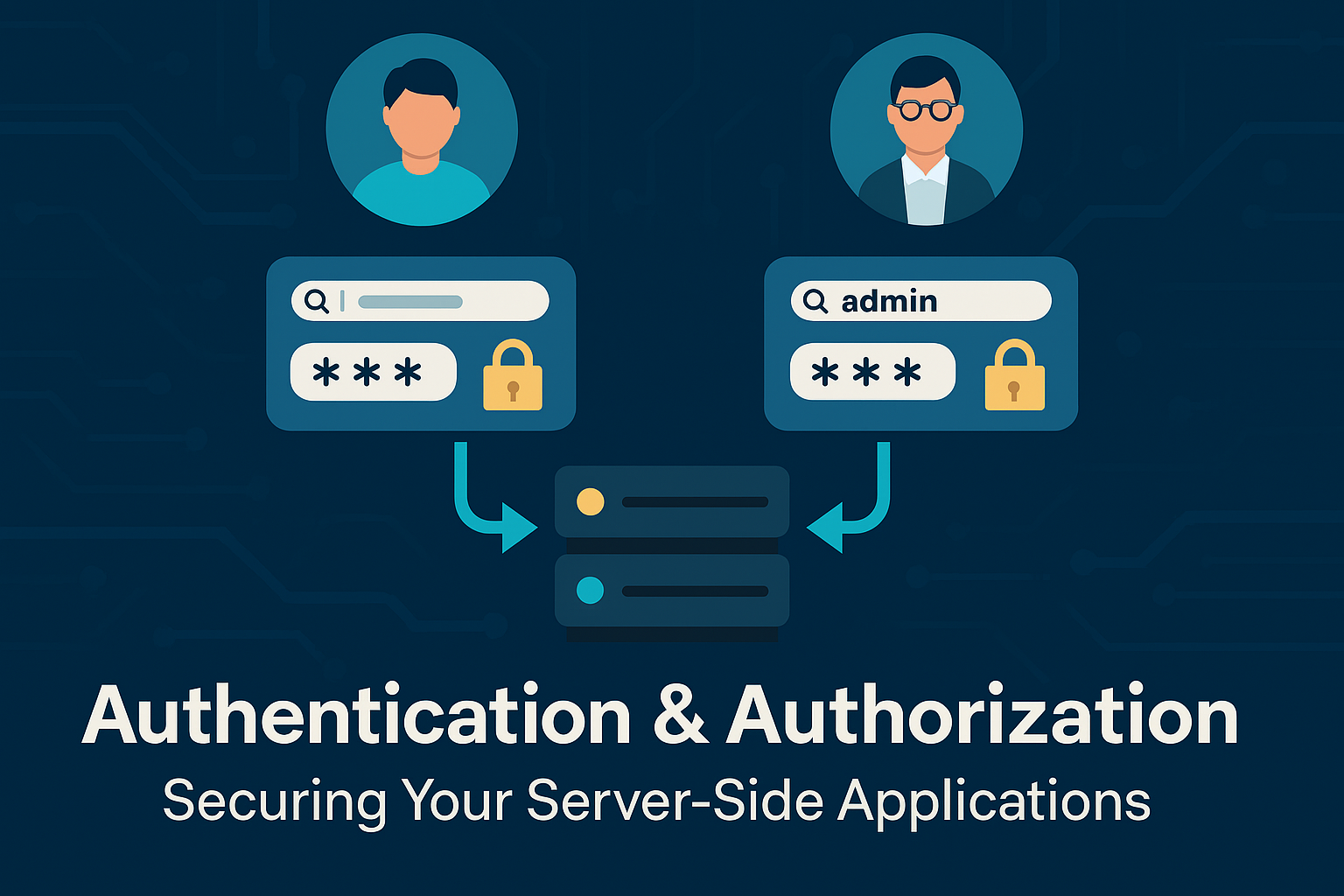
Authentication & Authorization: Securing Your Server-Side Applications
Introduction
In today’s digital world, where applications handle sensitive user data and financial transactions, security is not optional — it’s essential. Two critical components of server-side security are authentication and authorization. While these terms are often used interchangeably, they serve very different but complementary purposes in protecting your application from unauthorized access.
Understanding Authentication
Authentication is the process of verifying who a user is. It ensures that the person or system trying to access your application is actually who they claim to be.
When a user logs into a website, enters a username and password, or signs in with Google or Facebook, that’s authentication in action. The server checks the provided credentials against stored data — typically hashed and salted passwords — to confirm identity.
Common authentication methods include:
-
Password-based authentication: The most common approach, where credentials are stored securely on the server.
-
Multi-factor authentication (MFA): Adds an extra layer of protection by requiring multiple proofs of identity (like a code sent to your phone).
-
Token-based authentication: Used widely in APIs and mobile apps, where tokens such as JWT (JSON Web Tokens) are issued after successful login and sent with each request to verify the user’s identity.
For modern server-side applications, token-based authentication has become the go-to solution due to its scalability and stateless nature. This means the server doesn’t need to store session data, which improves performance and makes horizontal scaling easier.
Understanding Authorization
While authentication verifies who you are, authorization determines what you’re allowed to do. Once the user’s identity is confirmed, the server checks their permissions or roles before granting access to certain resources.
For example:
-
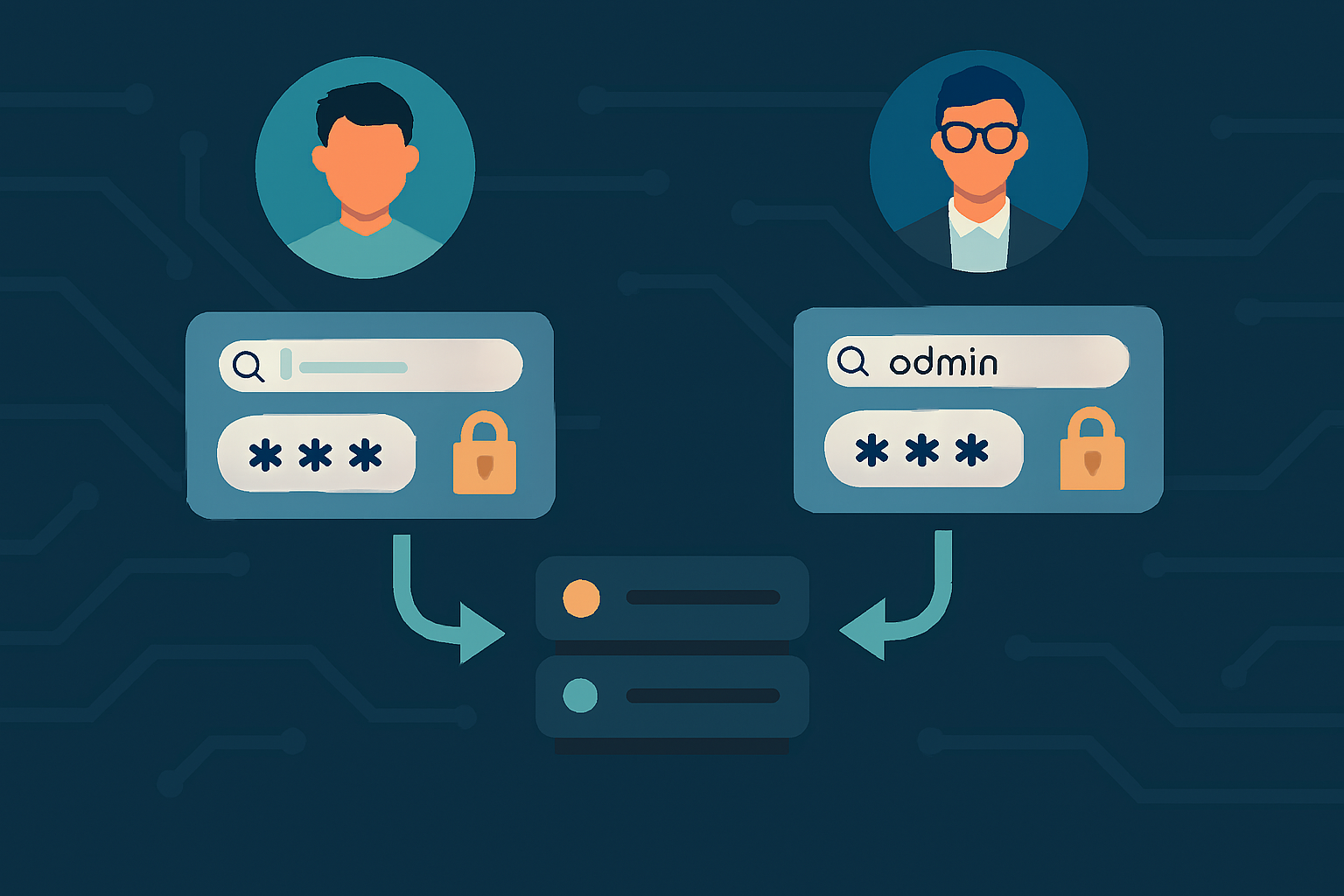
A regular user may view their own profile but cannot edit another user’s data.
-
An admin has permissions to manage all users or access restricted dashboards.
In server-side applications, authorization is typically implemented through:
-
Role-Based Access Control (RBAC): Users are assigned roles (like admin, editor, viewer) that define their permissions.
-
Attribute-Based Access Control (ABAC): Access is granted based on user attributes, resource type, and environment conditions.
-
Policy-Based Access Control: Defines detailed rules for who can access what, often used in enterprise environments.
By separating authentication and authorization logic, developers can build more modular and secure systems.
Implementing Authentication and Authorization Securely
When implementing these mechanisms on the server side, best practices are crucial to avoid vulnerabilities:
-
Use HTTPS: Always encrypt data in transit. Never send credentials or tokens over HTTP.
-
Hash and Salt Passwords: Use strong algorithms like bcrypt, scrypt, or Argon2 to store passwords securely.
-
Implement Token Expiration: JWT tokens should have expiration times to reduce risk if they’re compromised.
-
Validate Tokens on Every Request: Don’t assume a token is valid — always verify it against your secret key or public certificate.
-
Enforce Role Checks: Every API endpoint should verify that the authenticated user has the right permissions.
-
Log Access Attempts: Keep records of logins, failed attempts, and admin actions for auditing and security analysis.
Modern Trends in Server-Side Security
The rise of cloud computing and microservices has brought new ways to handle authentication and authorization. Many developers now rely on OAuth 2.0 and OpenID Connect, which delegate authentication to trusted identity providers like Google, Microsoft, or AWS Cognito.
Additionally, Zero Trust Architecture is becoming a security standard — assuming no user or device is trustworthy by default, even inside the organization’s network. Every access request must be authenticated and authorized dynamically.
Conclusion
Authentication and authorization are the backbone of secure server-side development. Authentication ensures that users are who they claim to be, while authorization ensures they only access what they’re permitted to. By implementing these mechanisms correctly — using best practices like token validation, encryption, and role-based access — you can significantly reduce vulnerabilities and build a safer, more reliable application.
In short: authentication identifies; authorization controls. Together, they form the first line of defense in protecting your users, data, and reputation.